Transmission Art as Ecological Attunement to Non-Human Bioacoustic Worlds Maintained By : Sharath Chandra Ramakrishnan, Assistant Professor at University Of Illinois Urbana-Champaign @agentspock
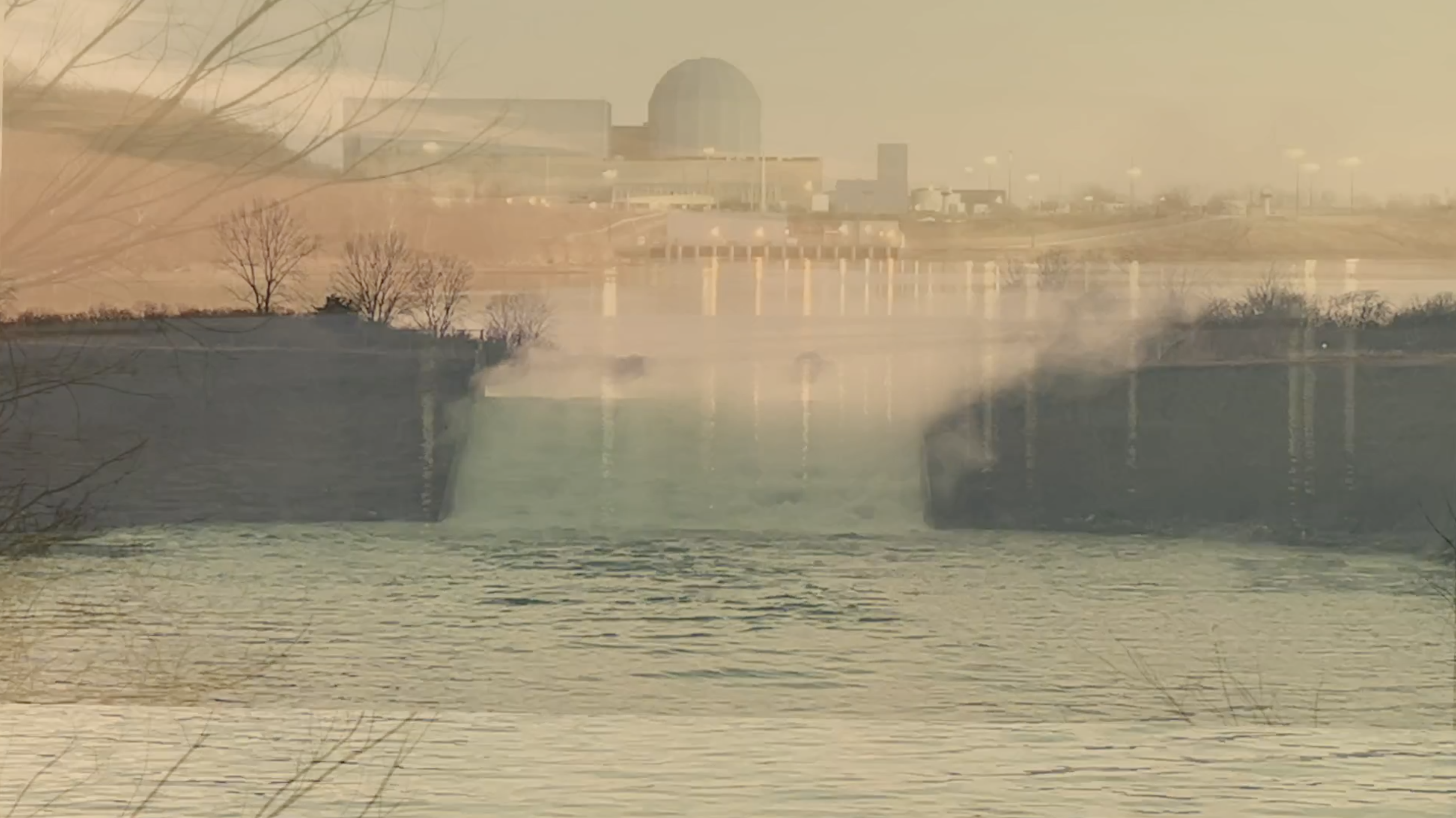
Reservoir of Circuits is part of a group curation titled, "Another Place: Storymaking the Entangled Prairie" curated by Teri Weismann. Reservoir of Circuits is an audio-reactive visual installation that reveals Clinton Lake as an artificial landscape shaped by nuclear energy, historical displacement, and contemporary AI infrastructures. Created by damming the North Fork of Salt Creek to cool the Clinton Nuclear Power Station, the lake overlays Indigenous land once inhabited by the Illini Confederacy and later settler agriculture. Today the facility operates under a renewed multi-year energy contract supplying power to Meta’s AI servers. Geological vibration data and generative synthesis drive the soundscape, triggering visuals of the power station and the heated water discharged back into the reservoir. Audio and image remain tightly coupled, rendering the lake as a hidden interface where land use, nuclear power, and the computational demands of AI converge
Echoes in The Dark exhibited at The Ammerman Center for Arts and Technology 18th Triennial Symposium, March 26–28, 2026, New London, CT.
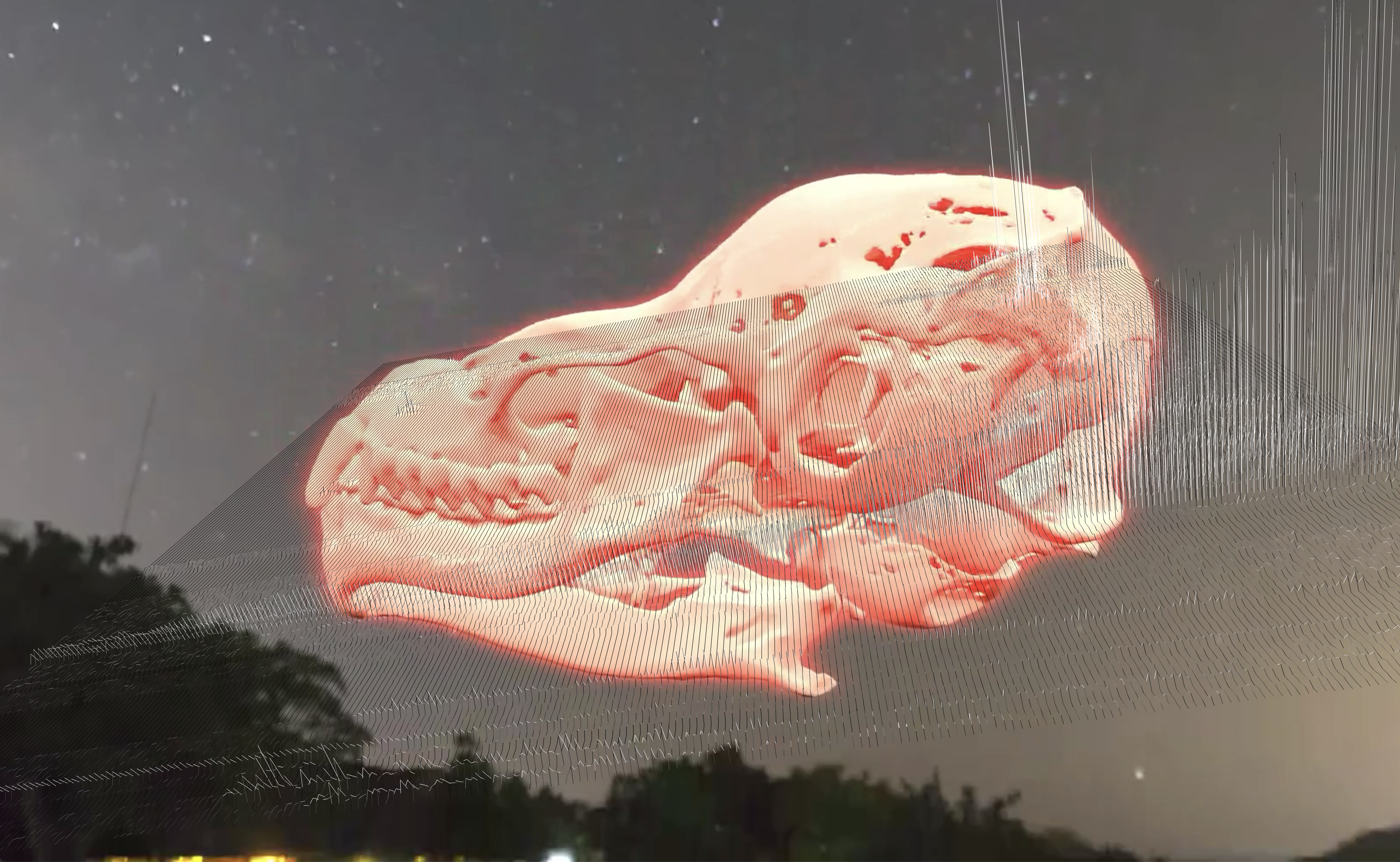
Echoes in the Dark, is an interactive transmission arts based audio-visual installation that translates archived ultrasonic transmissions of bat echolocation into an immersive audiovisual form. Audio reactive visuals around skulls of endangered bats destigmatize the popular cultural potrayal of bats and instead present them in their vulnerable form.
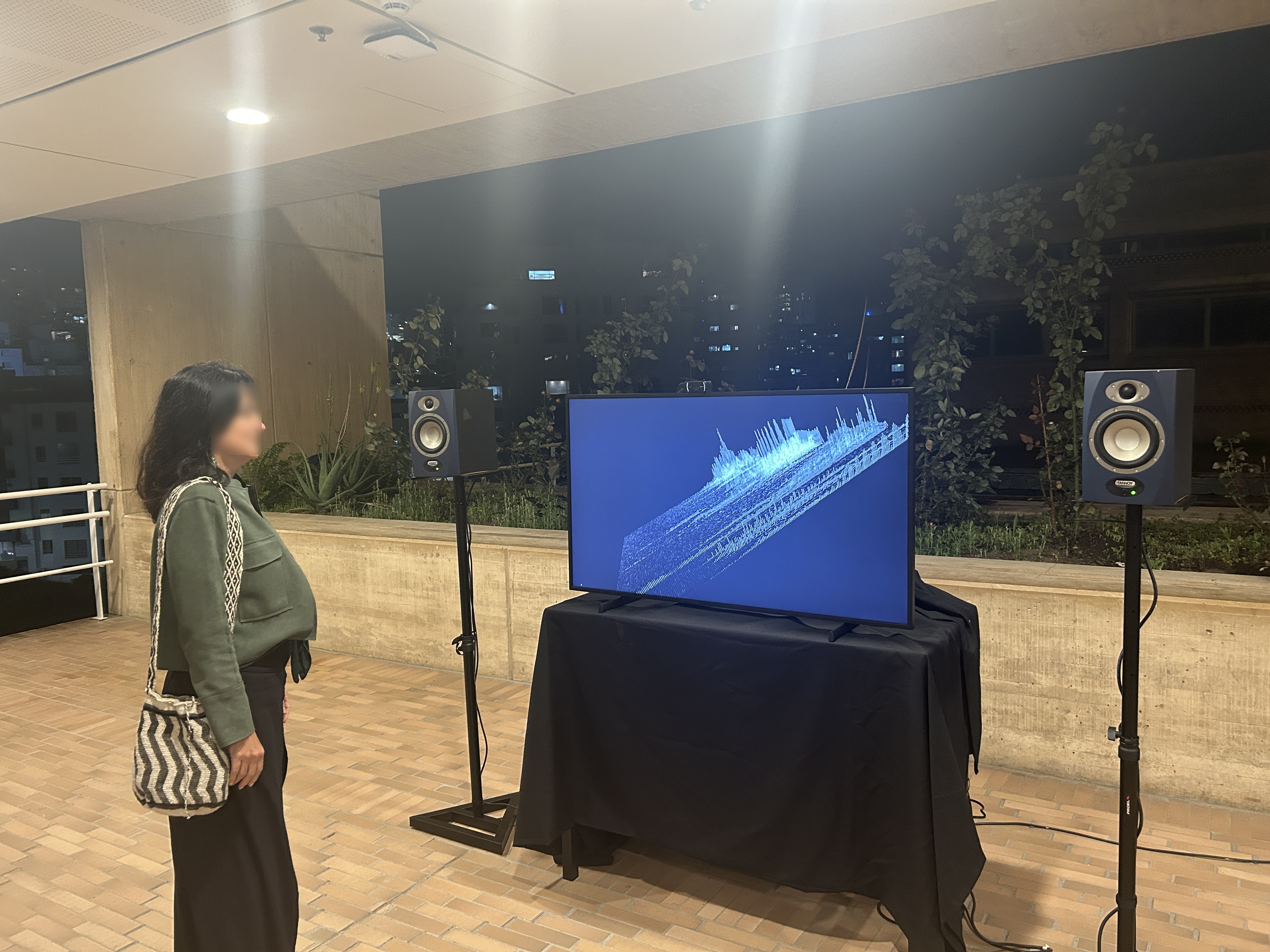
Interactive Sound Installation featuring echolocation of bats at the XIV International Image Festival (Festival Internacional de la Imagen), held at Manizales, Colombia. Sharath Chandra Ram was an invited international artist.
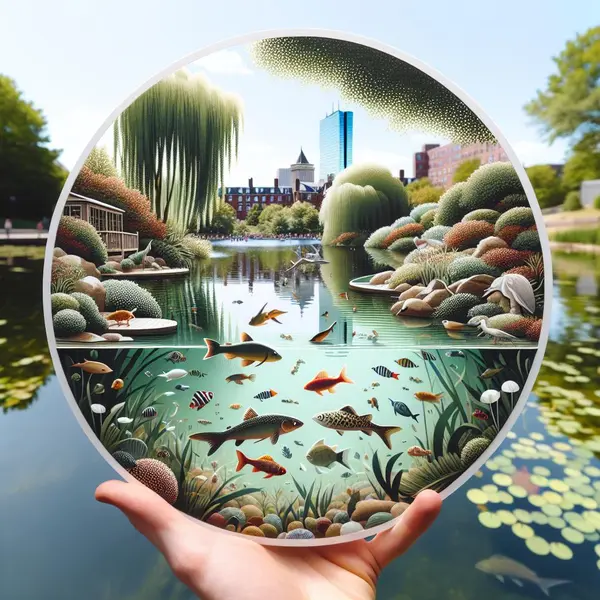
Collaborators: Scot Gresham Lancaster and Sharath Chandra Ram. Untitled Lagoon Ecologies at the 50th Anniversary International Computer Music Conference (ICMC) , Boston, MA, invited listeners into the submerged and spectral ecologies of Boston’s Public Garden Lagoon. Using underwater recordings, ultrasonic echolocations of bats, bird calls around the Boston Public garden, and excerpts of sounds of endemic species from bioacoustic archives, Untitled Lagoon Ecologies reveals a layer of sonic commons typically inaudible to human ears. The piece introduces the concept of a Parliament of Non-Human Listeners, a speculative framework extrapolating on the Latourian idea of Parliament of Things, that treats the sonic expressions of non-human life as acts of presence and participation.
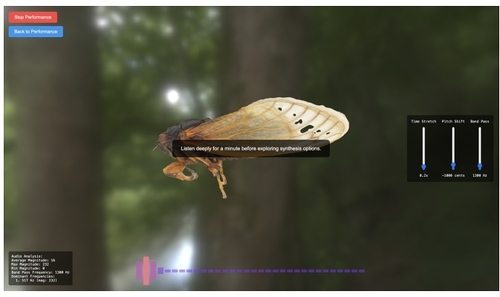
This work captures and re-imagines the acoustic phenomenon of the rare emergence of periodical 17-year cicadas along the Sangamon River in Illinois. Conducted over a week during the summer of 2024, the field recordings document the interwoven calls of Magicicada Septendecim and Magicicada Cassini, revealing the sophisticated bio-acoustic mechanisms that enable these species to coexist without interference, each occupying distinct frequency bands in a continuously shifting sonic landscape. Through an immersive audiovisual installation, the work transforms these temporal soundscapes into an interactive experience, highlighting both the vibrancy and fragility of these biological rhythms.
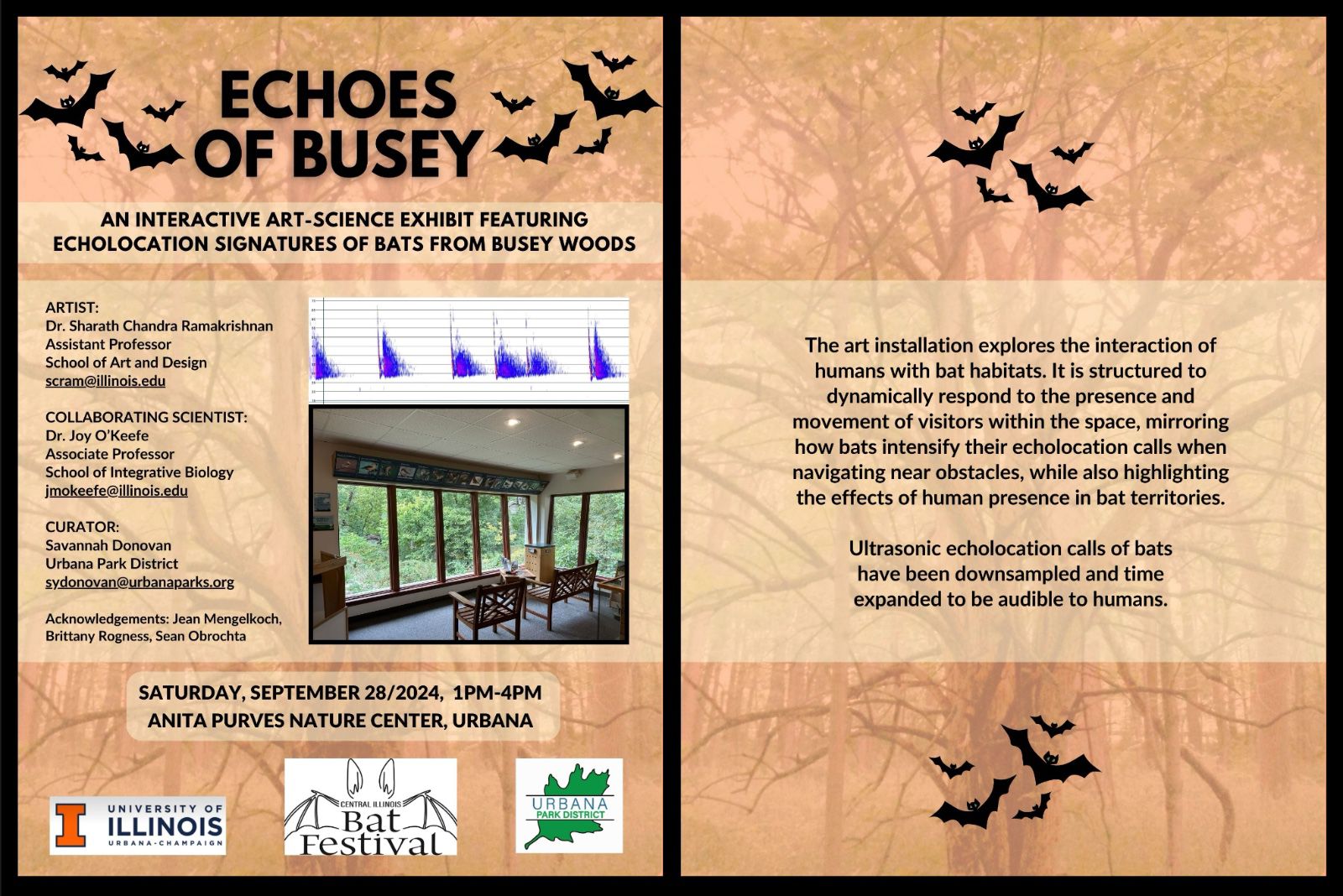
The art installation explores the interaction of humans with bat habitats. It is structured to dynamically respond to the presence and movement of visitors within the space, mirroring how bats intensify their echolocation calls when navigating near obstacles, while also highlighting the effects of human presence in bat territories. Ultrasonic echolocation calls of bats have been downsampled and time expanded to be audible to humans
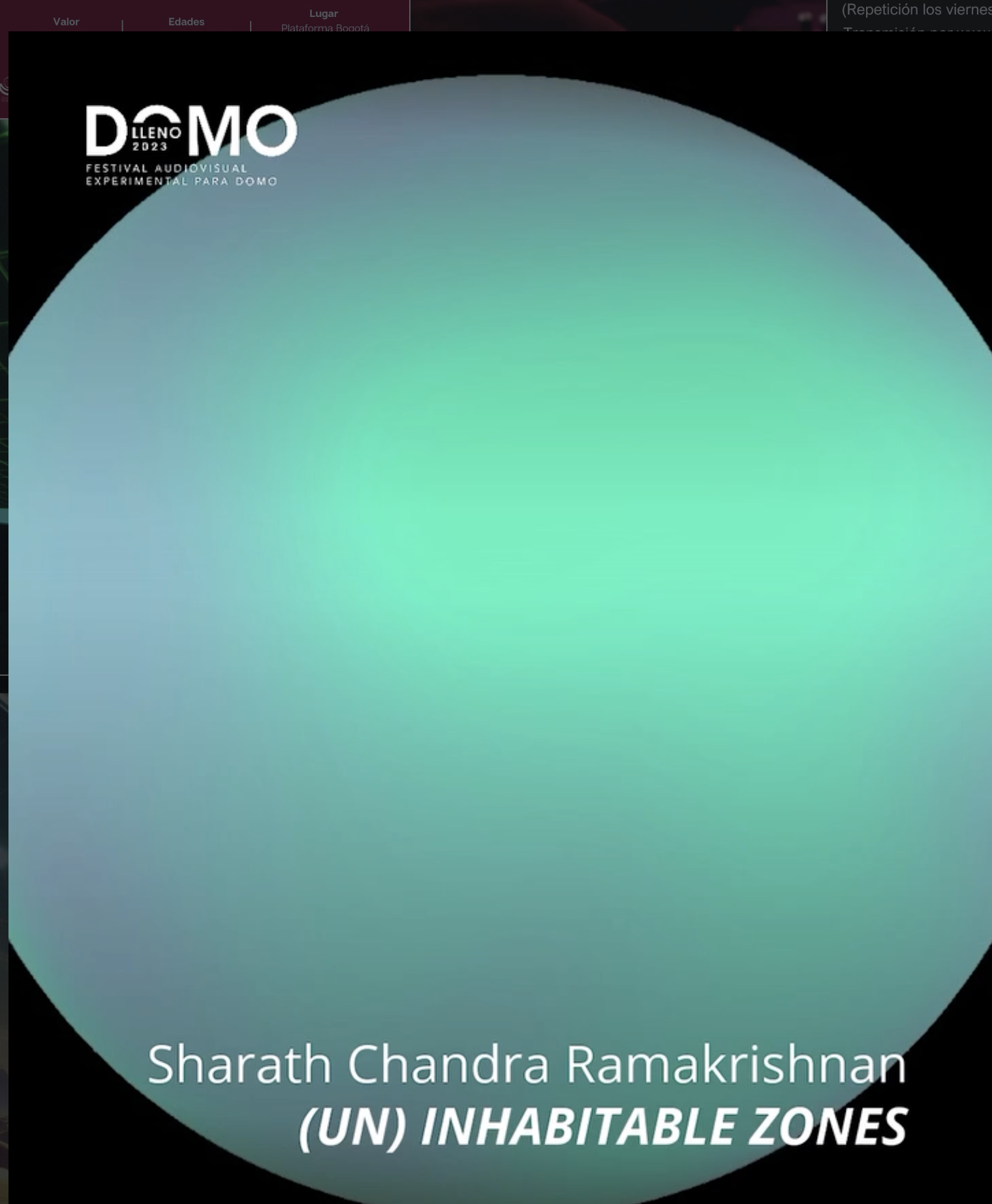
Orgaized by IDARTES and the Secretary of Culture, Recreation and Sports of the Mayor’s Office, Bogota, Colombia. One of 5 invited international multi-channel sound art works, and featured a sonified simulation of the planet Kepler 47-C's orbit around twin suns, where the conditions for sustaining life are thought to exist.
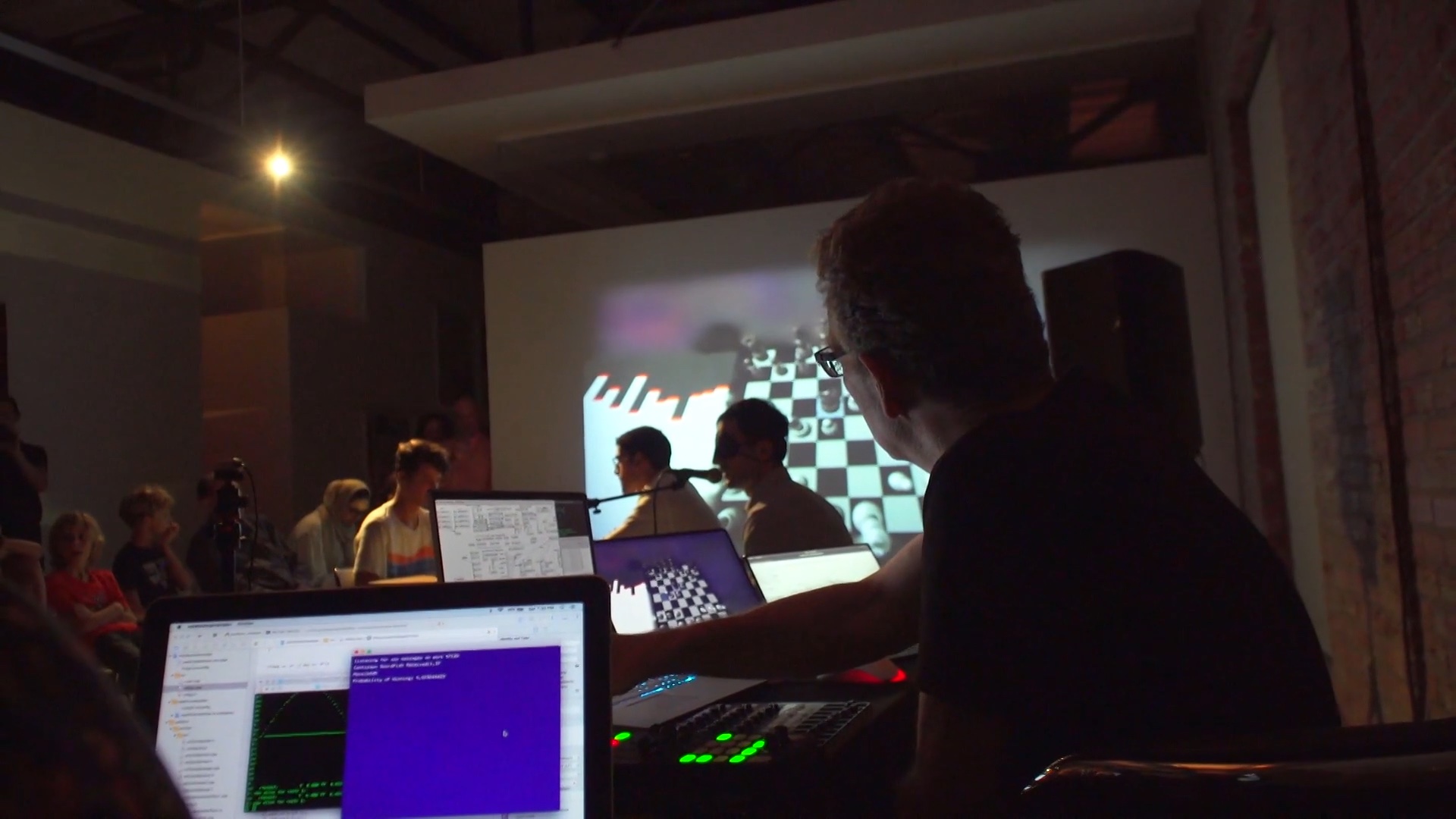
The Power Station added a new entry to the history of chess and performance art. The creative team included UT Dallas Grandmaster-elect Zura Javakhadze, along with transmission and cognition artist Sharath Chandra Ram, award-winning composer Scot Gresham-Lancaster, computer scientist William Thibault. The probabilities of winning of each chess move was converted into a sonic representation highlighting tension and game changing moves to the audience and blind folded chess player. Click to see feature in the US Chess Federation Website.
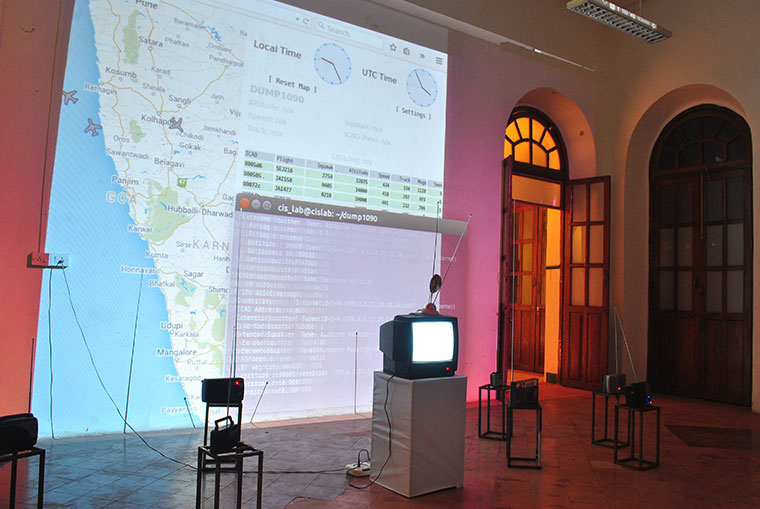
‘Traffic Dabolim’ is a transmission art installation that captures human orchestrations occurring in the spectrum of invisible light, intercepting maritime and air-traffic broadcasts as a sound installation along with a visualization of air traffic entering Goan airspace, by decoding aircraft wireless transponder data in realtime.
Selected Text Excerpts from the Diary of Anais Nin were converted into a sonic representation and embedded into the soundtrack of the cult film 'Inauguration of the Pleasure Dome'(1954) in this one of kind interactive media installation with projection mapping. Visitors received the sound file as an email attachment and decoded their message back to text by feeding in sound into the microphone of the listening machine using their mobile phones. The media experiment investigated innovative ways by which audience can effectively engage with reading text.
Displayed at the 23rd International Symposum for Electronic Art at Manizales, Colombia, and Science Gallery Dublin@Bangalore Metro, this project explores the interplay between ‘the climate of economies’ and ‘the economies of climate’ in the age of networked Big Data. While critically examining the property rights behind climate infrastructures, signals from local aiport radar weather stations were decoded to obtain a climate data archive for further processing and sonification. Projection Mapping using OpenFrameworks (C++), Data Analysis and Sonification using Python, Supercollider and Abelton live.
Air Traffic Data Re-Transmission and Audification (International Summit for Critical and Transformative Making 2015). 'Traffic’ captures human orchestrations occurring in the spectrum of invisible light, intercepting maritime and air-traffic broadcasts as a sound installation along with a visualization of air traffic entering a city's airspace, by decoding aircraft wireless transponder data in realtime. A DIY collinear Antenna at 1090MHz was used to intercept air traffic data for Real Time Data Sonification using Supercollider. The sound synthesis was re-transmitted to a local radio frequency spectrum.
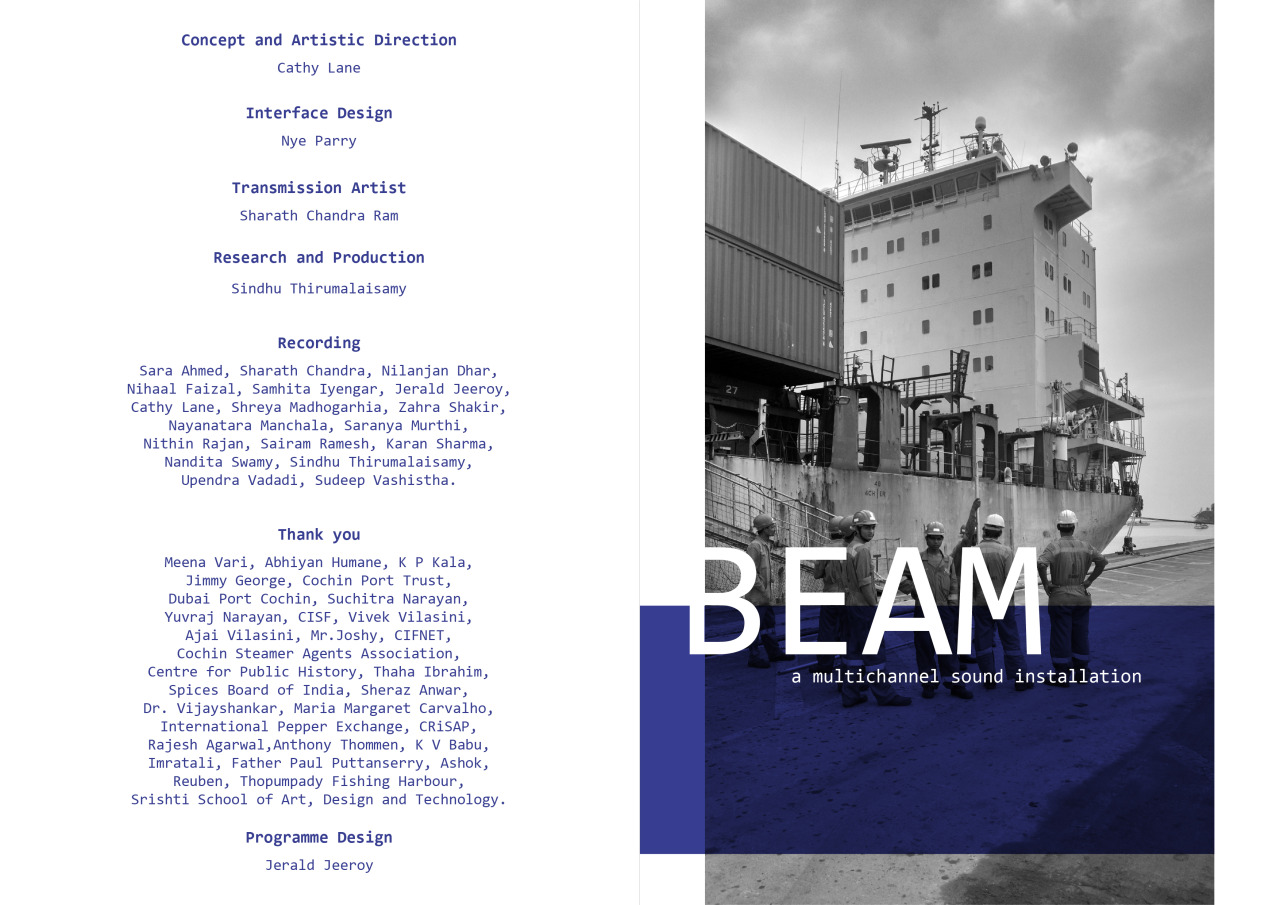
A multi-channel sound installation conceived by Dr. Cathy Lane from the Creative Research in Sound Art Practice, University of Arts, London. Sharath Chandra Ram was a collaborating Transmission Artist. BEAM was composed from archival material and maritime radio communications through the sonic translation of AIS (Automatic Identification System) data. BEAM was exhibited as a Collateral Event during the Kochi Muziris Biennale 2014.
.
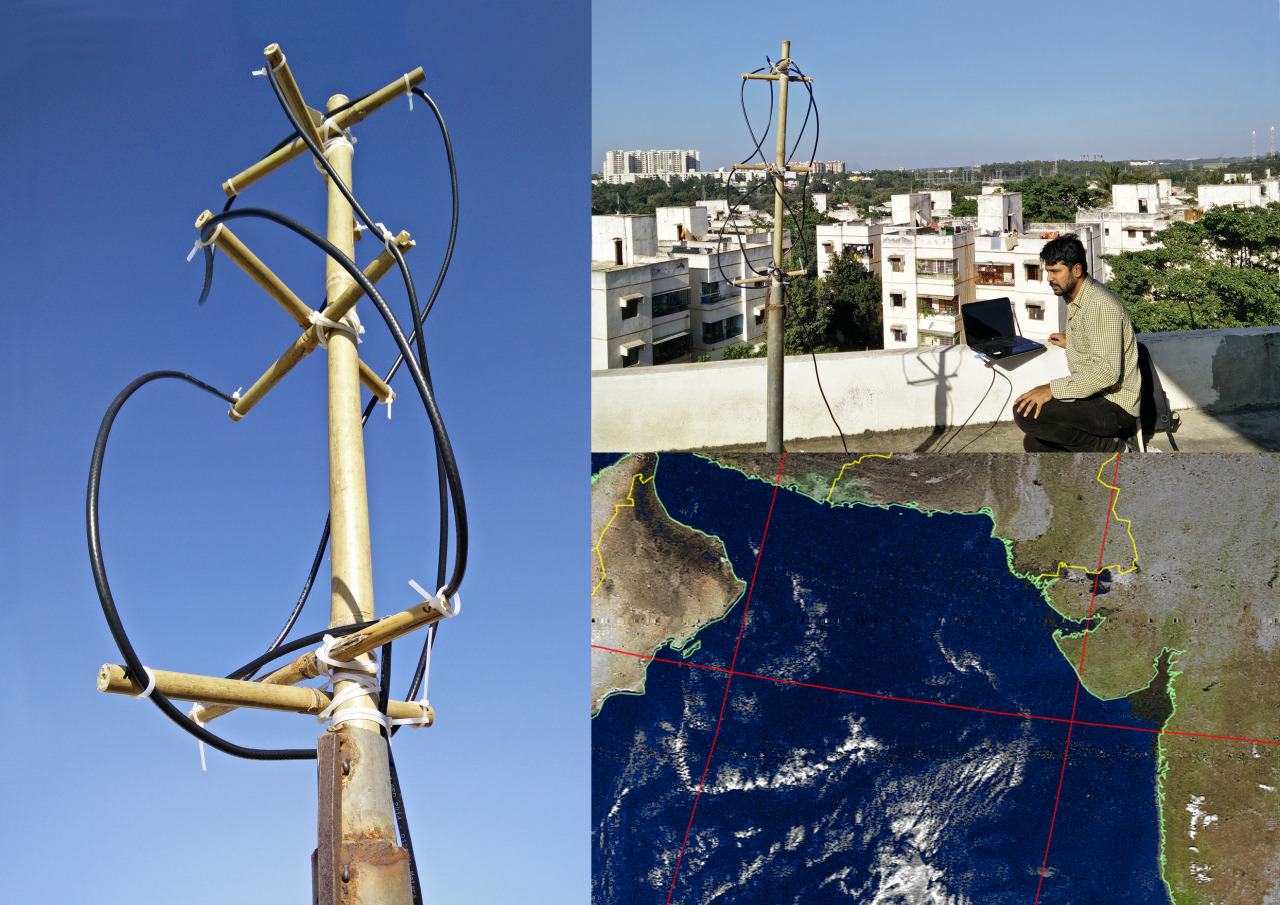
Quadrifilar Helical Antenna to receive downlinks of imagery and sensor data from overpassing USGS and NASA Polar satellites at the 137Mhz band. The data received was an encoded sound that had to be reprocessed and decoded to produce the overhead image. THis project was part of the The RadioLuna Project for Open Science Communication in collaboration with designer Catalina Alzate Mora. Also presented at the International Astronomical Union, Commission C2 CAP Conference in Medellin as well as the International Conference on Information and Communications Technology for Development, 2016, Ann Arbor, Michigan.
'Neon Fauna' explores 'generalized symmetry' and interactions between Nature and Artificial Reality.The sound scape of 'Neon Fauna' was self-generated in real-time by motion analysis on the video artifacts.
A set of distributable data sonification modules using Csound and Jupyter notebooks for various data types, ranging from time seres and RGB heat maps to bar charts and scatter plots. A collaboration between Sharath Chandra Ram, Scot Gresham Lancaster (Affiliate Researcher at Center for New Music and Audio Technologies, UC Berkeley) and Roger F Malina (ATEC Distinguished Chair and Professor at University of Texas at Dallas)
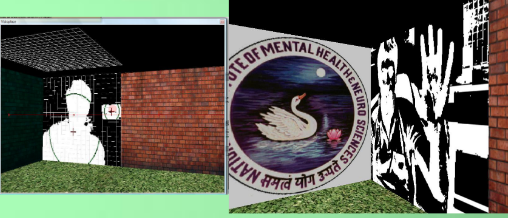
This software is based on Sharath Chandra's 2008 Masters thesis at the University of Edinburgh, School of Informatics, within the Institute of Perception, Action and Behaviour. The prototype involves an interactive virtual reality that enables an individual to observe her/his own body movements from a 3rd person view, while realtime computer vision algorithms enable coherent motion based interactions with virtual multimodal objects. It provides a framework that integrates the Perception-Action-Behaviour cycle, to give a better perspective of the 'Body Schema' for use in VR therapy for motion disabilities, as well as other experimental paradigms.
The recent article by Sharath Chandra Ram in the Artnodes Journal on Art, Science and Technology, provides creative technologists with pathways to break the norm and innovate in the realm of AI based listening machines. Of special interest to the Signal Cultures Lab are opportunities to question the concept of normative listening, to innovate for hearing impaired users of cochlear implants and hearing aids.
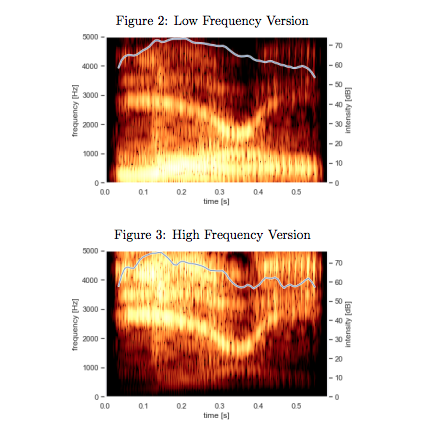
This study explores the formation of a complex illusory conjunction in simulated speech perception, confounded by 2 disparate spatial modalities – a) spatialization of competing formant features across high and low frequency bands on one hand and b) high-level expectation of speech content competing with the low level processing of auditory objects (such as speechmodulated noise). This paper has extended on a previous initial study around this topic, by controlling for the illusory conjunctions in one of the spatial dimensions (formant space) to then account for specific individual differences as possible correlations with individual hearing abilities across the audible frequency range. The results are an encouraging direction towards a better understanding of hearing loss through the controlled perception of illusory conjunctions.